

06 Jul Industry Catches up to BCC
Advice courtesy of Instagram
Look inside the average modern kitchen cabinet and you will likely find a morgue of warped, defaced, and retired plasticine non-stick pans. For over 60 years, the cookware industry has prospered on a model of planned obsolescence, cajoling cookware buyers into a 2-to-3-year cycle of buying, degrading, discarding, and replacing.
But culture is now wise to the grift. Cooks are beginning agitate against disposability, seeking out kitchen tools built for a lifetime, or several lifetimes. The cookware industry is taking notice.
Pay to throw away
Of course, none of this surprises copperheads, but the environmental and functional cracks in the disposable cookware model have become impossible to ignore for the rest of the world. In a recent article by Consumer Reports, the writers issued an explicit a wake-up call to home cooks to “break up with your nonstick frying pans,” warning that “regardless of the coating that you choose, your nonstick pan will deteriorate over time.” (Note that the same problems inherent to so-called “ceramic” linings seem to elude CR)
When synthetic pans inevitably degrade, they cannot be recycled or repaired; their next and final station is a landfill. Finally, after decades of continuous waste-making, the cookware industry is in the throes of a kind of an awakening of sorts. As a recent trend analysis by MolecularCloud on the global resurgence of traditional metals points out: “Compare (pure metal) to single-use plastics or coated cookware that need replacing every few years. For eco-conscious buyers, copper represents the ultimate circular economy material: it’s mined once, lasts forever, and returns to the earth without harm.”
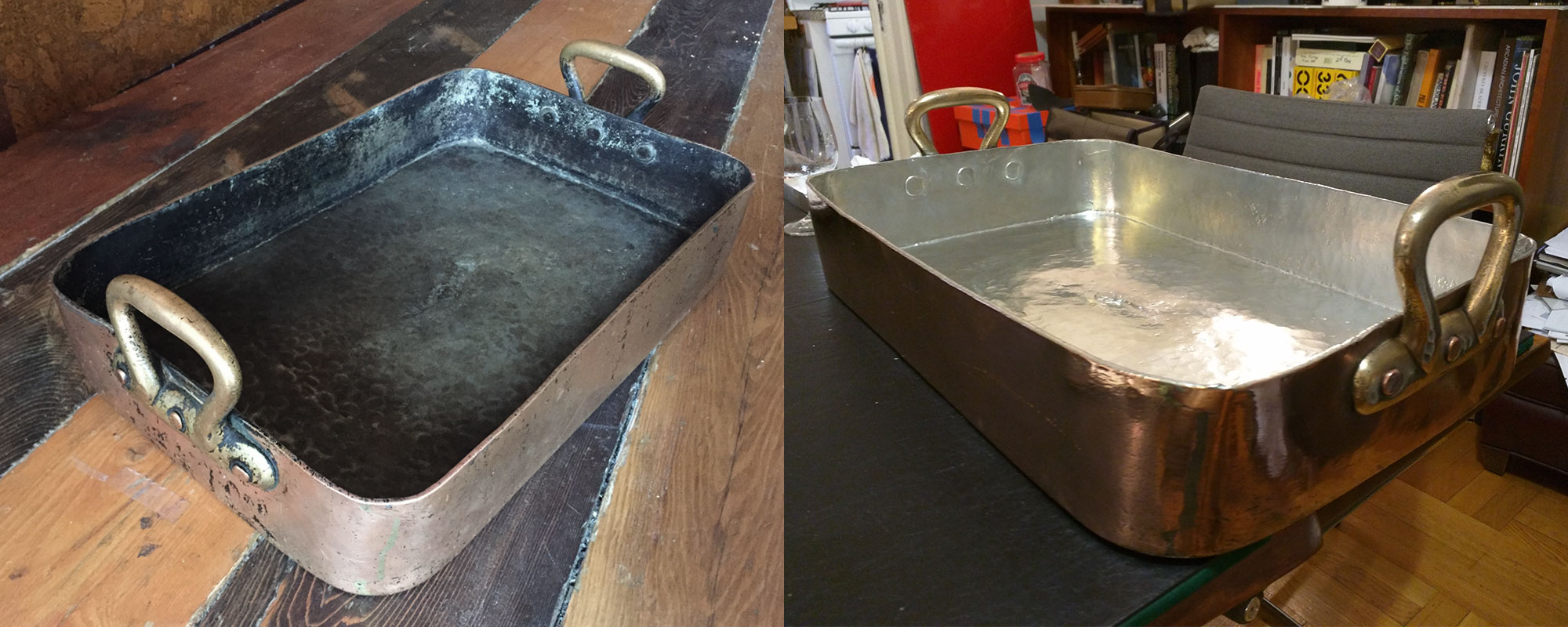
In geological terms maybe copper cookware “returns to the earth without harm” but in the more manageable scope of a human lifetime, BCC is designed to work peerlessly over decades and, when a new lining is needed, return to service without harm (time and again, at minimal expense).
Even more tellingly, market researcher DataIntelo has performed detailed forward-looking analyses of the cookware market and copper’s position within it, stretching out to 2034. According to them, the global cookware market is undergoing a massive structural transformation, with copper projected to surge from $3.2 billion to $5.4 billion by 2034 as buyers “aggressively reject disposable kitchenware in favor of a sustainable ‘buy once, buy right’ philosophy. Fueled by a major spike in premium kitchen spending, billions of monthly social media cooking views, and a booming luxury hospitality sector, both professional chefs and home cooks are rallying around copper as the ultimate culinary asset. With pots and pans dominating this 6.1% annual growth wave, the data support that the market is fundamentally redefining cookware—moving away from temporary convenience and toward permanent, high-performance heirlooms valued for their unmatched thermodynamic precision and multi-generational durability.”
Not News to Copperheads Since 2009
Brooklyn Copper Cookware doesn’t have to pivot toward sustainability; when we founded BCC in 2009 we were already exhausted by disposable culture. We organized the entire company around a single (then unfashionable) philosophy: cookware should be a permanent household asset. We posted to the first BCC website in 2010:
“When a synthetic pan scratches, it becomes a liability. When a tin-lined copper pan shows its age after a decade+ of heavy love, it isn’t dead or dangerous—it’s just ready for a reset. By re-tinning, the cooking surface can be completely restored to factory-new performance without sacrificing the integrity of the heavy-gauge copper hull.”
We detail in our own BCC Sustainability Charter that copper, and indeed pure metal cookware generally, is entirely circular. We continue to make BCC on the premise that “whether damaged or aged, copper cookware lined with tin can be restored time and again, making for a pot that will literally last centuries. Your great-grandchildren will thank you.”
The rest of the cookware industry is finally catching up: “sustainable” is what you only have to buy once. That’s been our story since the beginning, and we’ll be sticking to it. The rest of the cookware industry can’t step off the disposability treadmill soon enough.